Steel platforms hold everything together in petrochemical units. If we make a mistake, it doesn’t just cost money—it puts people, schedules, and future profits at risk. I’ve seen how even small errors at the start can snowball into headaches nobody wants. So, how do we get this process right, from initial visit to final bolt-up? Let’s break it down together, step by step, using lessons learned from years in the field.
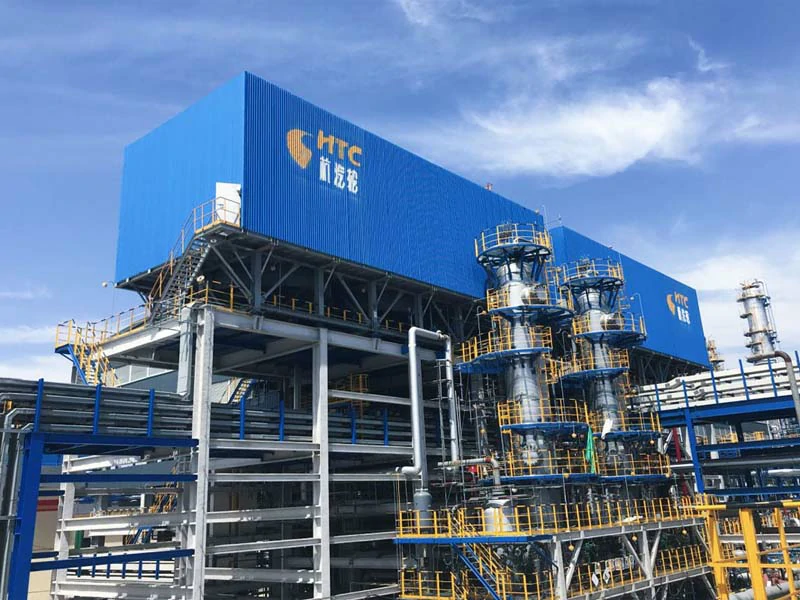
To fabricate complex steel platforms for petrochemical units, we must start with a real site survey, then design with the plant’s actual needs in mind, choose materials for toughness and compliance, plan for modular builds, double down on quality control, and finally install with complete attention to detail. Each of these steps is not just a box to check—they are the foundation for project success, safe working environments, and long-term plant reliability.
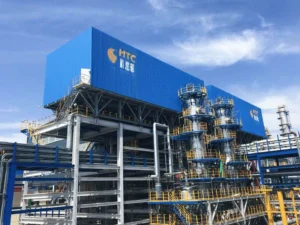
Every EPC project I’ve worked on had its unique challenges. No two sites or clients are the same. A plan that worked for one refinery might flop at another. That’s why I insist we approach these jobs with open eyes, ears, and a willingness to adapt. Let’s walk through each stage like we’re at the plant together.
How do you accurately assess requirements and conduct a site survey?
If you’ve ever tried to install a platform only to discover a new pipe running exactly where your main support should go, you’ll know why a joined-up site survey is essential.
We gather all the relevant teams: piping, electrical, operations, safety—even maintenance. On one project, this approach helped us spot a line that wasn’t on any drawing and avoid a nasty clash. Here’s the checklist we use on every survey:
| Survey Item | Why It Matters | Our Process |
|---|---|---|
| Structural load data | Safe platforms must handle all expected weights | Review calculations, consult operations |
| Access routes & clearances | Operators need safe, direct access | Physically walk the paths, mark bottlenecks |
| Hazardous and confined zones | Extra precautions for explosions, fire, or chemicals | Map with HSE team, note every restricted area |
| Integration points with plant | Avoid clashes with pipes, ducts, and cables | Cross-check against up-to-date drawings |
| Corrosion, heat, and chemical risks | Choose right materials and coatings | Identify all exposures, sample as required |
| Maintenance and replacement needs | Platforms should help repairs, not hinder them | Ask maintenance crew for input |
We bring a notepad, tape, laser meter, and, arguably most important, a willingness to stop and ask, “What else could get in the way?” The best insights often come during informal chats with the people who work there every day.
How do you develop an effective design for complex steel platforms?
Once we know what we’re dealing with on site, design becomes much more than picking from a catalog. We’ve learned the hard way that off-the-shelf solutions rarely fit the messy reality of a petrochemical unit.
Our first principle is custom modeling. We build a 3D model (we like BIM for coordination). Everyone—engineers, end users, maintenance techs—gets involved before we freeze the design. Operators will tell you if a step is awkward or a handrail will block their toolbox. We also check:
| Platform Feature | Our Experience | Practical Considerations |
|---|---|---|
| Industry standards | Codes change; compliance avoids future trouble | Cross-check with legal and client requirements |
| Anti-slip surfaces & drainage | Safety can’t be optional | Choose serrated grating, add drip pans where needed |
| Handrails & guards | Fatigue and trips are real risks | Double-check heights, spacing, and fixings |
| Maintenance access | Ignore this, and you’ll soon hear complaints | Provide valve swing room, add service hatches |
| Section size optimization | Overdesigning costs money | Don’t overspecify—review actual load cases |
I remember one project where extra space under a platform made swapping out a valve a five-minute job instead of a shutdown. These details matter.
How do you select materials that perform in petrochemical environments?
Material selection is where saving a few dollars often leads to much bigger losses. We insist on real, trackable quality.
We always require mill certificates for steel—no exceptions. We’ve caught suppliers trying to send cut-rate steel by double-checking those documents. We also look for:
| Step | Why We Do It | How We Execute |
|---|---|---|
| Correct steel grade | Wrong steel fails faster—sometimes dangerously | Specify Q345, ASTM A36, SS400, depending on site |
| Supplier transparency | Hiding info is a red flag | Request certificates, do random third-party tests |
| Corrosion protection | Plants are tough environments | Use hot-dip galvanize or special coatings |
| Traceability | You need to know what’s installed, years later | Document heat numbers, bundle tags, test results |
Before we give any thumbs up, our quality inspector checks and matches every piece to the purchase spec. Once, a random check caught a substitution—we sent the steel back before it even reached the saw.
How do you plan fabrication to minimize rework and install delays?
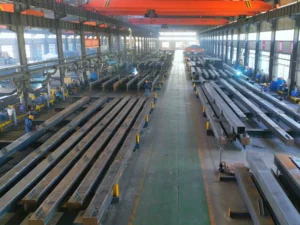
Building in the shop is easier than on the plant floor, so we try to assemble as much as possible before shipping. We found early that making platforms modular—easy to transport, fit together, and align—saves time and money.
Here’s the planning sequence we use:
- Break the platform into transportable modules that fit the available road and lifting gear.
- Draft clear fabrication drawings for every part—no ambiguity, no “shop decide” allowances.
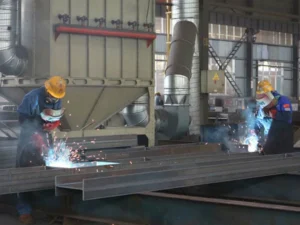
- Develop a welding schedule to avoid uneven stress and minimize distortion.
- Pre-assemble complicated items—especially handrails, stairs, and brackets.
- Factor in lifting lugs, protection for fragile items, and easy assembly marks.
- Stage regular QC checks—document every weld, and ensure every bolt hole lines up.
- Before anything leaves the shop, do a “fit-up” dry run of critical modules.
Modular builds allow the site team to install like building with blocks—no grinding or field “adjustments.”
How do you ensure quality and compliance throughout production?
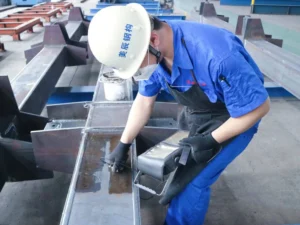
Quality isn’t hope—it’s a documented process. We check at every stage because catching a mistake in the shop costs a lot less than fixing it in the field.
| QC Step | What We Do | Why It’s Crucial |
|---|---|---|
| Material certification | Double-check origins, test reports | No surprises down the line |
| Weld inspections | Do both visual and non-destructive testing | Find hidden cracks before they cause failures |
| Dimensional checks | Use gauges—not just eyeballs | Everything must fit perfectly on site |
| Surface treatment checks | Confirm blasting, primers, thickness | Coating failures mean corrosion, fast |
| Load test/mock assembly | For critical platforms, assemble in shop | Proves real-world fit and performance |
After one full mock assembly revealed holes off by 2mm, we now include shop mock-ups in big projects—it gives our clients peace of mind and makes us more reliable.
How do you handle surface treatment and coating for long-term durability?
Coating failures are one of the main causes of mid-life shutdowns and expensive repairs. Our standard is to never cut corners here.
Here’s the process we follow every time:
| Step | Detail | Expected Result |
|---|---|---|
| Shot blasting | Always down to SA2.5 standard | Clean, roughened surface |
| Primer coat | Project-specified, fast application | Base layer bond to steel |
| Intermediate | As needed for harsh conditions | Double defense versus corrosion |
| Topcoat finish | Epoxy, fluoropolymer, as required | Shields from acid, weather, UV |
| Final check | Thickness, adhesion, curing | Confirms real-world protection |
One of our biggest lessons was seeing “hidden rust” develop where the wrong primer was used. Ever since, we specify both brand and application method—and we check after every spray.
How do you coordinate logistics, delivery, and installation for minimal risk?
Delivery is where weeks can be lost unless we plan and communicate well. We learned (the hard way) never to trust that a “standard” truck or offloading crew knows the pitfalls of handling custom steel.
Here’s our step-by-step:
| Step | Why We Do It | How We Ensure Success |
|---|---|---|
| Custom packing for protruding parts | Avoid transport damage | Use special covers, pad all sharp corners |
| Route and lift planning | No surprises in narrow access roads | Site survey, review with logistics early |
| Matching delivery schedule with shutdowns | Plant access can be very limited | Sync with operations, plan for window changes |
| Erection equipment and crew checks | Right gear = safe, quick assembly | Pre-approve rigging, train erection team |
| Laser leveling and survey tools for install | Every mm counts for safety/fit | Level and align all modules—double-check bolts |
| Handover and punch-list walkthrough | Quality and satisfaction | Involve all key people, fix every little issue |
It only takes one bent handrail due to bad packing to delay handover. We account for every detail so our platforms land ready to install, not to repair.
Conclusion
Each step in steel platform fabrication builds on the last. When we do things right from assessment to install, we save money, cut out stress, and deliver projects our clients can trust for years. The details matter—let’s get them right, every time.