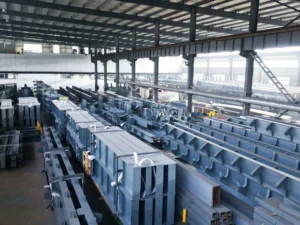
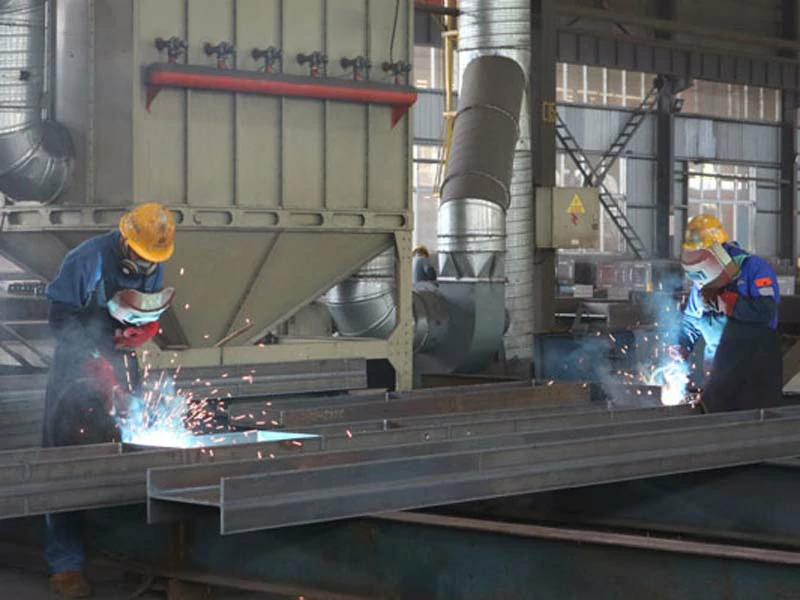
Let’s face it: in industrial steel construction, there’s no such thing as a “small decision.” Choosing between welded H-beams and box columns seems simple on paper. But in our experience, these choices ripple all the way from shop drawings to site installation, and even years down the road with inspection and maintenance.
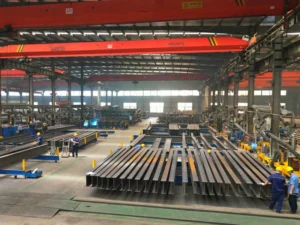
Many engineers and buyers come to us with a sense of urgency—and sometimes anxiety—about getting this right. We’ve been there ourselves, learning by trial, error, and a few expensive lessons. So, let’s walk through these key decisions together with honesty, practicality, and a little “steel structure street smarts.”
The Basics—But With Real Impact
H-Beams: Flexible, Familiar, and Fast
H-beams, with their signature “H” profile, are engineered for strength where you need it most: bending resistance. The flanges connect to the web at a right angle, distributing those heavyweight loads across wide spans—think huge warehouse roofs, busy mezzanines, or fatigue-heavy crane beams. We often recommend H-beams if flexibility and fast fabrication are top priorities.
Box Columns: Stronger Where It Counts
Box columns, or rectangular hollow sections, are basically steel boxes made from four thick plates, continuously welded together. This closed shape shines in resisting twists, buckling, and side loads. If you’re dealing with seismic loads, racking, or supporting heavy equipment (especially in confined footprints), box columns give you sturdiness and space efficiency that open sections just can’t match.
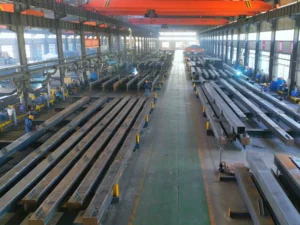
Where Each Option Shines: Lessons From The Shop Floor
When Do We Favor H-Beams?
- Long factory spans where beams must withstand constant vertical loads.
- Sites with tight schedules—we can fabricate and install H-beams quickly, especially using modular assemblies.
When Are Box Columns The Smarter Play?
- Loading docks or crane bays, where twisting and buckling from side loads are common.
- Urban projects, where maximizing usable space for work, storage, or traffic is critical.
- High-rise columns in seismic regions—a box section rides out a quake better than you’d think.
Real Talk:
We’ve solved a lot of last-minute site problems by simply matching the right section to the real structural demand. The best results nearly always follow this guiding principle.
Deep Dive: What Actually Makes or Breaks Your Decision?
Let’s break down six factors—and give you the “why” from our real-world perspective.
1. Look Beyond Static Loads—Prepare for What’s Next
Most specs highlight static (dead/live) loads. But in real life, vibration, impacts, and dynamic loads (think rolling cranes, heavy machinery, wind gusts) hit your steel hard. We learned the hard way: if you ignore torsion in your analysis, you risk over-stressing an H-beam where a box column would’ve breezed through. Not fun tracking down those cracks two years later!
2. Space Is Money—Especially on Packed Sites
Here’s a secret savvy clients get: box columns give more load-bearing capacity per square inch of floor space. In a crowded plant, that means you can run wider aisles, fit bigger equipment, or squeeze in another conveyor line. If you’re part of the project’s planning team, the space you save (or lose) shows up fast in the bottom line.
3. Quality Welding—Where Project Risk Really Hides
We’ve seen welds come back to haunt teams—especially with box columns. Full-penetration welds are non-negotiable but hard to inspect post-closing. Make sure you specify continuous, high-quality shop welding and non-destructive testing (like UT or RT scans) on every seam. With H-beams, the process is quicker and defects are more visible, but connections may still need stiffeners to prevent flange buckling under high stress.
4. Fireproofing—Don’t Let the Heat Sneak Up
We often remind clients: closed box columns trap heat. In a fire, those internals heat up fast, threatening the steel’s strength. If your spec or budget skips or skimps on extra fireproof coatings (vermiculite, intumescent paint, or encasement), you’re rolling the dice on safety and insurance costs. Meanwhile, H-beams are easier to spray or encase, but you still need to plan for fire rating at joints and supports.
5. Corrosion—Don’t Let “Out of Sight” Mean “Out of Mind”
Internal corrosion is a box column’s dirty little secret. If you close them up before inspection, moisture and mill scale can turn your shiny steel into rusty swiss cheese—unseen until it’s too late. We always insist on vacuum-cleaning, pre-painting, and photographing the insides before closure. H-beams make routine inspection, repainting, or touch-up a breeze. Which calls do you want to get in five years?
6. Site Handling—Planning Keeps Projects on Schedule
H-beams are like the LEGO blocks of the steel world—light, strong, and intuitive to handle. Box columns? Their bulk demands special rigging, custom lifting lugs, and internal bracing during transit. We always recommend talking shop with your erector/fabricator early—sometimes a quick chat avoids costly, crook-shaped columns showing up at sunrise.
Cost: It’s Not Just About Ton Price—Let’s Get Real
Here’s a financial truth we’ve learned over and over: material cost is only part of the story. Even if a quote for box columns seems close to H-beams, add up:
- Welding labor (box columns are slower and more expensive)
- Inspector overtime (NDT is essential but costly)
- Extra fireproofing materials/labor
- Future maintenance (especially internal corrosion risks)
Smart buyers always ask for lifetime cost projections and check the fine print. The cheapest upfront option can be a budget-buster five years in.
Experience-Based Comparison Table
| Criteria | Welded H-Beam | Box Column |
|---|---|---|
| Bending Resistance | Excellent | Good |
| Torsional (Twisting) Resistance | Moderate | Excellent |
| Fabrication/Shop Work | Easier, Faster | Demands precision/QA |
| Inspection & Future Maintenance | Open, accessible | Tough (internals hidden) |
| Space Efficiency (per footprint) | Lower | Higher |
| Fireproofing Needs | Moderate | High (traps heat) |
| Total Lifecycle Cost | Lower | Can be higher |
Our Honest Tips for Steel Buyers
- Don’t forget NDT: Always specify ultrasonic or radiographic weld inspections for box columns. It’s easy to skip—until you spot a crack post-erection.
- H-beams need love too: Insist on proper cambering (pre-curved for settling). We’ve seen cheap, un-cambered beams sag and ruin otherwise perfect roofs.
- Trust but verify: Ask your fabricator for documentation and internal photos of box column assembly. If you’re bidding or managing QA, this is a must.
- Go modular when it fits: Modular H-beam assemblies/bolted connections = faster installs and less field welding delays.
Pro Conclusion: Keep Your Whole Team In The Loop
If there’s one lesson we hope you take away, it’s this: don’t let a single department make the decision in a vacuum. We always encourage our clients to get input from design, procurement, fabrication, and especially maintenance. Collaboration, not speed, prevents costly surprises and leads to real project success.
We know these aren’t just numbers—they’re long-term investments in your operation and reputation. What saves a little up front often costs much more later, and this comes from years of cleaning up after short-sighted “savings.”
FAQ: Real Questions We Hear From Industrial Clients
Q1: How do I know if my project really needs box columns?
A1: If you’re expecting heavy lateral loads, twists/torques (like cranes or seismic activity), or need max strength on a tiny footprint, box columns are your friend. Otherwise, H-beams are often simpler and more cost-effective.
Q2: Are box columns always more expensive?
A2: Not necessarily for material alone, but when you add in precision welding, inspection, fireproofing, and maintenance—it usually pushes total costs higher.
Q3: Can we avoid hidden corrosion in box columns?
A3: Absolutely—demand suppliers clean, coat, and photo-document the interior. It only takes a small upfront cost to avoid a massive problem later.
Q4: What’s the number one mistake you see with H-beams?
A4: Skipping cambering or underestimating deflection. What seems “good enough” in the shop may cause service headaches for decades.
Let’s Talk—Experience You Can Rely On
If you’re still weighing your options or want a second opinion, let’s have a conversation. We’ve walked this path, fixed these problems, and helped hundreds of industrial projects stay safe and profitable—long after the ribbon cutting. Get in touch for real-world, supplier-agnostic advice and pragmatic solutions.