Missed certification details can quietly ruin a project—when things go wrong, they’re rarely simple to fix, and the costs always land with us, the procurement or engineering managers.
To truly keep control, we need to look beyond the certificate’s color or logo on the supplier’s desk. I’m sharing how to spot those simple, often-overlooked steps that separate a reliable supplier from a risky one, based on twenty years “in the trenches” with steel structures.
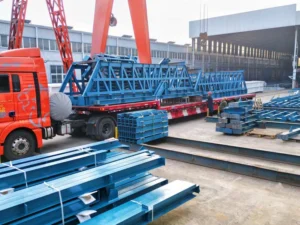
When deadlines are tight, and every mistake means money, we can’t afford shortcuts. That’s why we must check every important part of EN1090 and ISO certification, step by step. Over time, I learned that by asking just three or four pointed questions, I could immediately see if a supplier lived up to their credentials—or was just hoping you would stop at the certificate.
Let’s look at each part in detail, so you have a checklist that works even when you’re new to an unfamiliar supplier.
EN1090 Certification—Why It’s More Than Just “One Certificate”?
Many newcomers think all EN1090 certificates are alike. Actually, EN1090 is a badge of a factory’s entire capability, not a one-off approval or simple test pass.
Practically speaking, we must first check the Execution Class (EXC). Most public projects in Europe need EXC2 or EXC3, not the basic EXC1, which many factories settle for. You’d be surprised how many suppliers dodge this by handing over a nice-looking certificate, but if you look closer at the fine print, it’s only for basic gates or fences.
We always ask for the full certificate, not just a digital scan. The factory name and address must match the real producer, not a third-party agent or trading company. In one project, we narrowly avoided disaster because a supplier tried to pass off a borrowed certificate; luckily, we caught it before production began.
You should also insist on meeting the welding coordinator, not just looking at their name on paperwork. The best suppliers introduce their IWE or IWT-qualified coordinator directly, and with pride. I’ve had great results when I ask a few extra questions: “Can I see his or her qualification number? How do you track welding changes in actual production?” The answers tell you quickly if their production follows EN1090 every week, not just when the auditor visits.
Then, review any welding quality proof—especially WPS (Welding Procedure Specification), PQR (Procedure Qualification Record), and WPQR (Welder Performance Qualification Record). If the supplier hesitates, stalls, or cannot instantly produce documents from an audit done in the last 12 months, walk away. Good suppliers have a culture of discipline; weaker ones always seem to be “still looking” for what you need.
Here’s a simple table we use on every factory visit:
| Checkpoint | Details to Ask For | Why This Matters |
|---|---|---|
| Execution Class | EXC2 or EXC3 Certificate | Confirms capacity for high-spec work |
| Certificate Holder | Factory, not agent/trader | Prevents “borrowed” qualifications |
| Welding Coordinator | Meet, check qualification | Verifies in-house welding expertise |
| Audit Records | Last 12 months, full report | Confirms ongoing compliance, not just surface checks |
| WPS/PQR/WPQR | Request samples | Shows quality system is alive and active |
Factories that pass these checks always perform best during complex projects and handle problems fast.
How Can We Spot Real ISO Certification?
ISO certificates alone are no guarantee of quality; we must always confirm they are real, relevant, and alive at the supplier.
In practice, many procurement managers get burned because they only receive a scanned PDF from the supplier, which looks official but is easy to fake or buy. We always ask for a searchable registration number, which we check directly on the official ISO website or with the issuing body. If the supplier tries to avoid this, it’s a sign to dig deeper. We also verify that the “Scope” or covered business domain in the ISO certificate matches the steel structures or the exact product we want; sometimes, certificates cover only assembly, not real manufacturing.
But the most important thing comes next: “Show us this ISO system actually works here.” We always ask for an internal complaint log or nonconformance record from the past six months, and most importantly, any action report that came from it. Too many companies just fill forms and file them away when auditors come, and ignore them the rest of the time. Good suppliers will send copies right away and even explain how they used that feedback to improve things. The ones who hesitate tend to fail when pressure mounts on the project.
This quick checklist saves a lot of trouble:
| Audit Focus | How to Check | What It Proves |
|---|---|---|
| Certificate Valid | Registry number, search online | Proves certificate is real |
| Scope Relevance | Matches steel structuring/products | Ensures product is actually covered |
| Complaints Log | Request a sample/recent report | Demonstrates active system, not just paperwork |
| Issue Follow-up | Improvement action shown | Quality and process continuous improvement |
By working this way, we saved our clients huge headaches and even caught “fake ISO” suppliers before contracts were signed.
What Hidden Pitfalls Do Experienced Managers Avoid?
I’ve seen the offers, and I’m always cautious when a supplier’s price is much lower than the rest, or if they refuse to host us for a factory visit. Here’s why: Many use one valid EN1090 or ISO certificate for simple parts, then outsource bigger or more complex structures to small, uncertified workshops. Their paperwork might look fine, but the risk of weld failure, poor steel traceability, and late delivery goes up fast.
Some factories wave around CE documents, but it’s the FPC (Factory Production Control) system behind those that really matters. We always ask them to show us their traceability procedure for raw materials and their batch records. We also routinely ask if they can pull up a weld inspection report instantly. If they need hours to find one—or have never had a failed weld on record—it’s a red flag.
To help you, here’s the final set of questions I always use in high-stakes negotiations:
- Can you send us the last year of EN1090 audits—external or internal?
- Who is your welding coordinator today? Can we verify their certification?
- How do you trace steel origin and batch number for each project?
- Can you show us one real corrective action after a customer complaint in the past six months?
The best suppliers don’t hesitate. In fact, they’re proud to show how robust their management and systems are.
Here’s a table you might print and bring to your next supplier factory tour or online meeting:
| Hidden Pitfall | Question to Ask | Best Answer Should Include… |
|---|---|---|
| Suspect outsourcing | Specific EN1090 audits | Real, recent reports (not manuals) |
| Weak onsite expertise | Verify coordinator | IWE/IWT # and their real contact |
| Poor traceability | Steel/batch record | Digital or clear paperwork |
| Cosmetic ISO system | Corrective action proof | Actual documents, not process flowcharts |
| FPC/CE “on paper” only | See FPC process | Process map, records, and quick search |
Conclusion
Good certification checks are more than just paperwork—they protect your project’s safety, budget, and timeline. Real expertise is proven by open processes and honest conversations, not glittery documents.
If you ever run into confusion during a review, or need to solve a tricky supplier evaluation, reach out. With 20 years of “learning the hard way,” I’d be glad to give you advice you can use right away!