Top 5 Questions to Ask Before Outsourcing Industrial Steel Fabrication?
If you miss these critical questions, you risk delays, quality disasters, and unnecessary costs. But if you ask the right way, you control your project’s future.
The five most important questions to ask when outsourcing industrial steel fabrication cover project experience, quality controls, true production capability, communication transparency, and how they handle engineering changes.
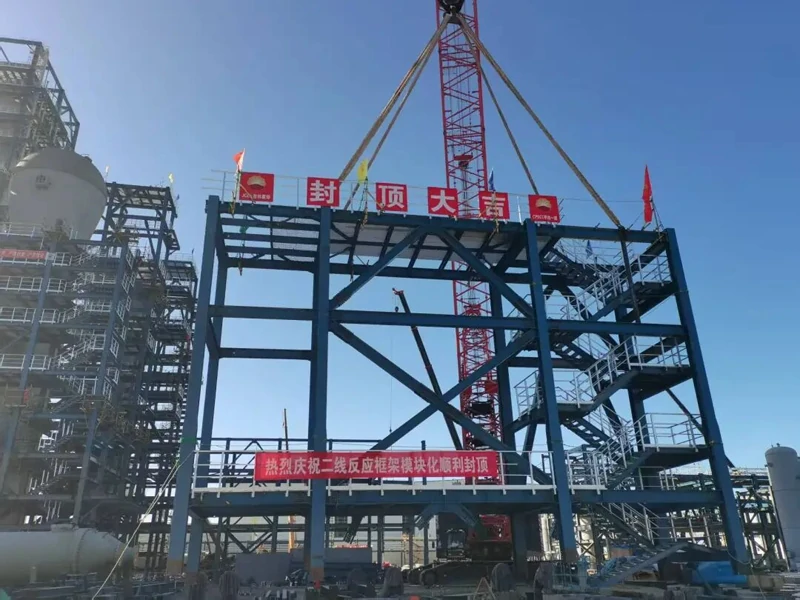
When you decide to outsource steel fabrication, every detail can impact your results1. If you’ve managed large-scale projects for decades, you know mistakes can destroy budgets and schedules. I’ve worked in this field for over twenty years. I’ve seen good projects turn bad because clients missed their chance to ask tough questions up front. Below, I’ll break down each essential question and how it shapes your risk and reward.
What Is Your Track Record With Similar Projects?
You worry about whether their claims are real. Even if a supplier files certifications, they rarely show you where things went wrong.
The best way to gauge a fabricator’s suitability is to ask for detailed case studies of similar projects2, covering specifications, grades, and industry sector, and to get direct references you can contact3.
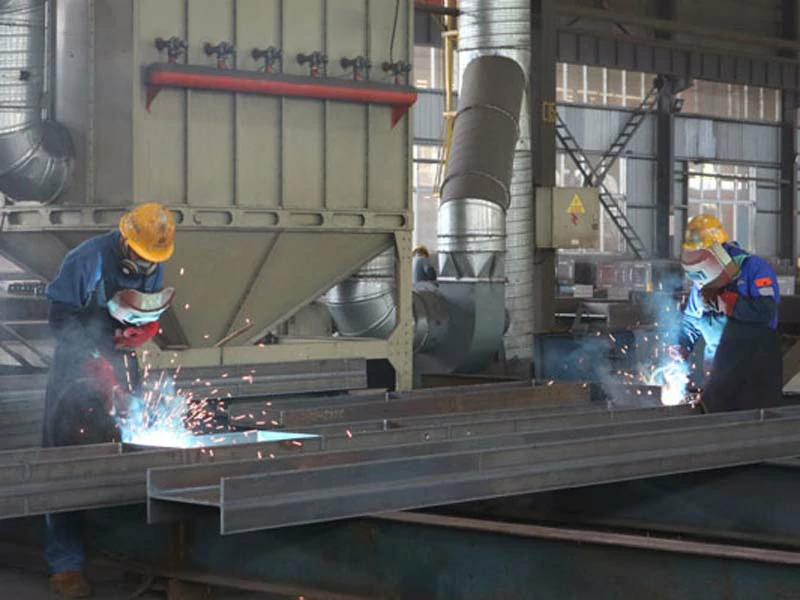
When I first began sourcing steel, suppliers would hand over fancy brochures and glossy photos of completed buildings or tanks. What really helped was when I visited an actual ongoing jobsite. I saw workflow, safety habits, and how supervisors dealt with problems. Case studies matter, but nothing compares to seeing plant organization and control during real work. Ask not only to see documents—request to tour an active project4. Make sure references are truly people you can talk to, not just polished marketing names.
| Criteria | Why It Matters | What to Ask |
|---|---|---|
| Case Studies | Relevance to your scope | Project details, material grades |
| Ongoing Projects | Plant quality | Site visits |
| References | Honest feedback | Speak directly to past clients |
How Do You Control Quality Throughout the Fabrication Process?
Quality lapses can turn triumphs into nightmares, especially with large steel assemblies or critical parts.
Elite fabricators demonstrate their QA system with full material traceability5, in-process checks6, comprehensive NDT capability7, and tailored Inspection Test Plans8.
When overseeing a petrochemical project a few years back, I asked every bidder to show me their material traceability system. The best ones used heat number tracking9, custom ITPs, and mandatory vendor inspections. Most suppliers rely on final inspection but miss hidden flaws. Scrutinize how they manage MTCs (Mill Test Certificates), what kind of NDT (like ultrasonic or magnetic testing) they use, and how they document work. Always insist on seeing full sample inspection records. If the fabricator cannot present documents tailored to your job, not just generic templates, you are at risk.
| QA Area | Industry Practice | Questions to Ask |
|---|---|---|
| Material Trace | Heat numbers, MTC review | Ask for samples |
| In-process QC | Regular stage inspections | How often, who signs off |
| NDT Capability | UT, MT, PT tests | What tests, who performs |
| Inspection Plan | Job-specific ITP | Request full project ITP |
What Is Your True Production and Delivery Capacity?
The worst thing is when a supplier over-promises and fails, putting your schedule in danger.
Checking a supplier’s true production and delivery capacity means not just asking for tonnage but digging for output logs, Gantt charts10, and workflow bottlenecks.
There was a client who lost their contract after months of work because the vendor couldn’t finish on time. I always ask about monthly output11, how many projects run in parallel, and where bottlenecks hit (like the painting shop or CNC drilling). Ask for recent order logs or Gantt charts. Look into subcontracted labor and auxiliary processes12—some suppliers secretly outsource work and that can lead to hidden risks. Ask for a site walk-through to see workflow firsthand. If the shop looks chaotic, deliveries will crumble.
| Factor | Assessment | What to Review |
|---|---|---|
| Tonnage Output | Actual vs claimed | Monthly order history |
| Project Parallel | Count active jobs | Conflict risks |
| Bottlenecks | Shop workflow | Walkshop, Gantt chart |
| Outsourcing | Vendor transparency | Subcontractor info |
How Transparent Is Your Communication and Project Management?
Without clear updates, your control over the project slips and mistakes multiply.
Every project needs a clear communication plan. Look for regular progress reports, dedicated managers who know your business, and tech-based reporting platforms.
I once managed a complex refinery expansion in Texas and the supplier only used outdated email chains and WeChat. Problems snowballed until I insisted on biweekly dashboards and video calls. The best partners offer reporting through Teams, Slack, or cloud dashboards. Ask for sample project reports and progress dashboards from previous jobs. Find out how often you get updates and who manages them. Insist on a contact who understands both engineering and commercial language. Regular feedback loops prevent nasty surprises and keep your risk low.
| Tool | Performance | What to Request |
|---|---|---|
| Project Manager | Tech fluency | Bio and contact info |
| Progress Reports | Frequency | Samples from past projects |
| Reporting Platforms | Cloud or not | Platform screenshots |
How Do You Handle Unexpected Problems or Engineering Changes?
Change is inevitable. If not managed well, costs balloon and timelines unravel.
Elite fabricators have documented RFI and change management systems, plus they share stories of challenges solved to prove capability. On a large power plant build, we faced a sudden change in weld design after fabrication started. Because the supplier had robust communication policies and a systematic change control process, they responded quickly and saved us weeks. Ask for their RFI and change control system details. Request examples showing how they resolved real-world problems in the past year. If they struggle to answer, that’s a red flag. This tells you how they manage engineering surprises and whether they can save you from disaster.
| Change Factor | Best Practice | What to Explore |
|---|---|---|
| RFI System | Tracked actions | Process flow, sample docs |
| Challenge Answer | Real-world stories | Ask for past examples |
| Communication | Reliable feedback | Contact person info |
Conclusion
The right questions reveal if a steel fabricator can truly deliver. Always insist on detailed answers, clear documents, and proven transparency.
"Contract/Procurement Management", https://www.pmi.org/learning/library/contract-procurement-management-9101. Project-management standards describe procurement planning, scope definition, quality requirements, and supplier control as interdependent factors affecting cost, schedule, and performance outcomes; this supports the risk framing only at a general project-governance level. Evidence role: general_support; source type: institution. Supports: In outsourced steel fabrication, detailed upfront requirements and controls can materially affect project results.. Scope note: Contextual support from project-management guidance rather than steel-fabrication-specific empirical proof. ↩
"Past Performance | www.waru.edu - Defense Acquisition University", https://www.waru.edu/acquipedia-article/past-performance. Procurement and supplier-evaluation guidance commonly treats prior performance and relevant experience as evidence for assessing supplier capability; this supports requesting comparable case histories, although it does not prove that case studies alone predict success. Evidence role: expert_consensus; source type: government. Supports: Detailed case studies of similar projects help assess a fabricator’s suitability.. Scope note: Supports the practice as part of supplier evaluation, not as a standalone guarantee of fabricator suitability. ↩
"BEST PRACTICES for COLLECTING AND USING CURRENT AND ...", https://obamawhitehouse.archives.gov/omb/best_practice_re_past_perf. Public procurement evaluation frameworks include past-performance references and reference checks as methods for verifying supplier claims; this supports the value of contactable references, with the caveat that reference selection may introduce bias. Evidence role: expert_consensus; source type: government. Supports: Direct references are useful for verifying a fabricator’s claimed experience and performance.. Scope note: Reference checks can be selective and should be used with other due-diligence evidence. ↩
"ISO 9001 Supplier Evaluation: Criteria, Forms & Scorecards", https://isocertificationgroup.com.au/blog/iso-9001-supplier-evaluation-criteria-forms-scorecards/. Supplier audit and quality-management guidance recognizes on-site assessment as a way to evaluate operational controls, resources, and process implementation; this supports active-site tours as due diligence, though access and observations may not represent all projects. Evidence role: mechanism; source type: institution. Supports: Touring an active project can help evaluate a fabricator’s organization, process control, and work practices.. Scope note: A site visit provides observational evidence but may not capture long-term performance or all operational conditions. ↩
"[PDF] Standard Certification Programs - AISC.org", https://www.aisc.org/media/eyhbumzu/207-25-with-changes-higlighted.pdf. Steel-construction quality standards require identification and traceability of materials in specified circumstances, supporting the use of material traceability as a quality-control measure; applicability depends on the contract, code, and criticality of the component. Evidence role: definition; source type: institution. Supports: Full material traceability is an important feature of a robust fabrication quality system.. Scope note: Traceability requirements vary by project specification and governing standard. ↩
"[PDF] Fabrication Inspection of Structural Steel Products", https://www.codot.gov/programs/bridge/bridge-manuals/fabrication_inspection_of_structural_steel_final-3_18_19.pdf. Quality-management standards emphasize monitoring and verification during production rather than reliance solely on final inspection; this supports in-process checks as a recognized control mechanism, not proof that any specific inspection frequency is sufficient. Evidence role: mechanism; source type: institution. Supports: In-process checks are part of effective fabrication quality control.. Scope note: The source would support the principle of in-process verification, while inspection points must be tailored to the fabrication code and project risk. ↩
"NON-DESTRUCTIVE TESTING", https://www.monroeccc.edu/sites/default/files/programs/files/NDT/NonDestructiveTesting-2019-20n.pdf. Nondestructive testing standards and welding codes describe methods such as ultrasonic, magnetic-particle, and penetrant testing for detecting discontinuities without damaging the component; this supports NDT capability as relevant to fabrication quality, while required methods depend on design code and acceptance criteria. Evidence role: definition; source type: institution. Supports: Comprehensive nondestructive testing capability is relevant to quality assurance in industrial steel fabrication.. Scope note: NDT requirements differ by weld type, service conditions, and applicable code. ↩
"[PDF] construction supervision and quality assurance plan", https://openknowledge.worldbank.org/bitstreams/f08df5ed-da64-52e8-a578-0ee92d241654/download. Inspection and test plans are widely used to define hold points, witness points, responsibilities, and acceptance criteria for construction and fabrication work; this supports project-specific ITPs as a control tool, though the exact format is typically contract-specific. Evidence role: definition; source type: institution. Supports: Project-specific Inspection Test Plans help structure fabrication quality control.. Scope note: The source would support ITPs as a common quality-planning instrument, not mandate one universal template. ↩
"Heat number - Wikipedia", https://en.wikipedia.org/wiki/Heat_number. Material traceability practices in steel fabrication use heat or cast identification to link finished components to mill test documentation and material properties; this supports heat-number tracking as a traceability mechanism, subject to the governing specification. Evidence role: mechanism; source type: institution. Supports: Heat number tracking links fabricated steel components to their material records.. Scope note: The degree of heat-number traceability required varies by standard, material, and project criticality. ↩
"07. Project Planning & Scheduling | CM II - City Tech OpenLab", https://openlab.citytech.cuny.edu/cm2/readings/07-project-planning-scheduling/. Project-management references identify Gantt charts as schedule-visualization tools for showing activities over time and monitoring planned versus actual progress; this supports their use in delivery-capacity review, but charts depend on the accuracy of underlying schedule data. Evidence role: definition; source type: encyclopedia. Supports: Gantt charts can help buyers examine fabrication schedules and delivery commitments.. Scope note: A Gantt chart is useful only if the schedule inputs and updates are reliable. ↩
"Capacity Planning for Production - Aurora University", https://online.aurora.edu/capacity-planning/. Operations-management literature treats actual throughput, capacity utilization, and bottlenecks as core measures for evaluating production capability; this supports reviewing monthly output, although historical output may not predict future delivery under changed demand. Evidence role: mechanism; source type: education. Supports: Monthly output data can help assess a fabricator’s true production capacity.. Scope note: Past output is an indicator of capacity, not a guarantee of future schedule performance. ↩
"[PDF] Cybersecurity Supply Chain Risk Management Practices for ...", https://nvlpubs.nist.gov/nistpubs/SpecialPublications/NIST.SP.800-161r1.pdf. Supply-chain risk guidance notes that outsourced and lower-tier supplier activities can create visibility, quality, compliance, and delivery risks; this supports scrutiny of subcontracted labor and auxiliary processes, though the risk level depends on controls and contract terms. Evidence role: general_support; source type: government. Supports: Subcontracted labor and auxiliary processes can introduce hidden risks if not transparent and controlled.. Scope note: Subcontracting is not inherently problematic; the concern is unmanaged or undisclosed subcontracting. ↩